
Most enterprises assume their biggest data problem is not having enough of it. The more expensive problem is the data they already have, sitting in systems that were never designed to work together and quietly producing a version of the truth that no two teams fully agree on.
This is where confidence quietly turns into risk. Fragmented data does not slow a business down in ways that are easy to see and fix. It shapes strategy, forecasts, and payment performance from the inside, while everyone involved believes they are working from a complete picture.
Missing data announces itself, so you go find the number before you decide. Fragmented data does the opposite, handing you the false comfort of a full report while feeding you partial truth.
That misalignment creates three core risks:
In fast moving industries, those blind spots rarely stay small. They compound.
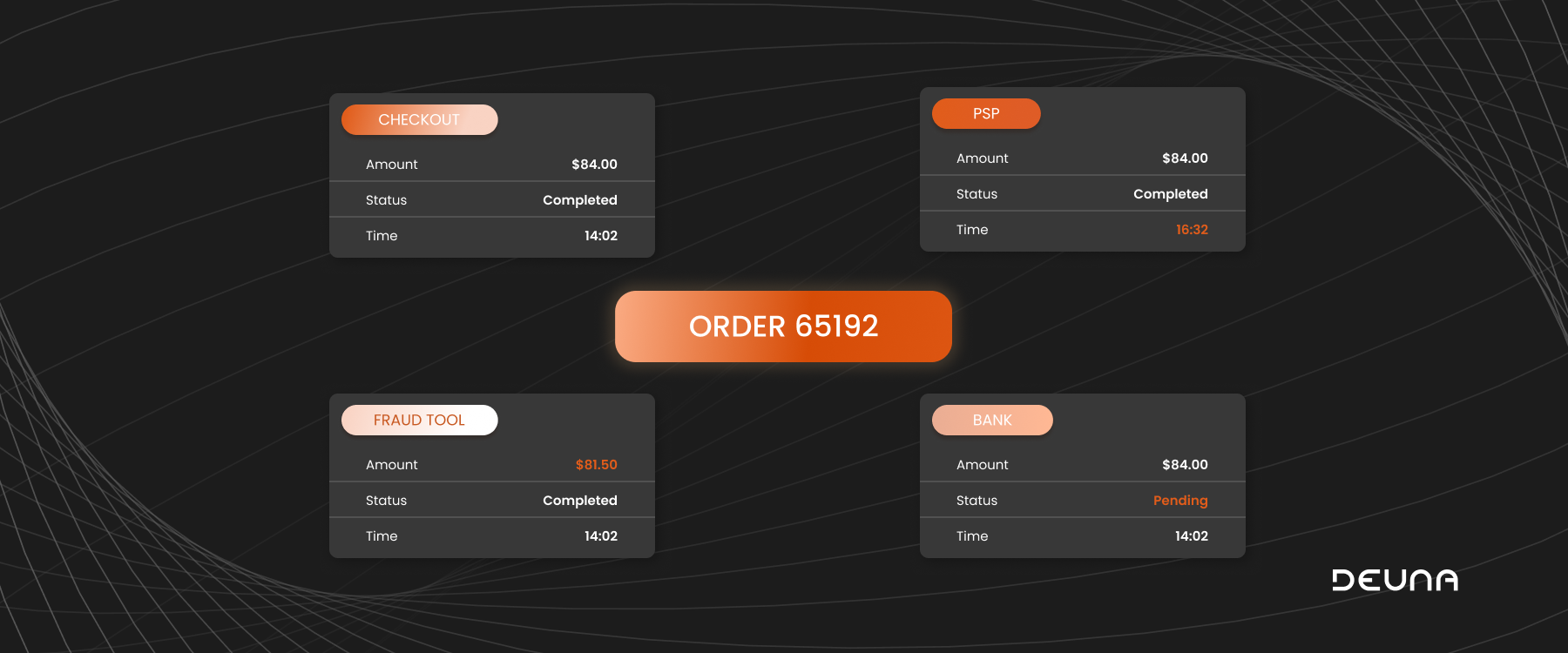
Nowhere is this more costly than in payments, where a single transaction touches your checkout, one or more payment providers, your fraud and risk tools, and your finance stack. When each layer reports separately, you lose the ability to see the full journey of a payment exactly where money is won or lost.
Approval rates dip in one region and no one connects it to a specific provider. Declines that could be recovered look identical to those that cannot. Processing costs creep up because no one can compare providers in one place.
None of these problems are caused by a bad payment partner. They are caused by payment data that never comes together into a single, trustworthy view, in the part of the business where fragments are most expensive.
Fixing fragmented data is not about adding more dashboards on top of the same disconnected systems. It is about changing how data flows and how quickly it becomes usable at scale.
It starts with automating ingestion, connecting payment providers, checkout engines, fraud tools, and internal CRMs into one real-time pipeline that removes the manual exports and overnight delays that make data stale before anyone reads it.
From there, machine learning can standardize and normalize on the fly, detecting structure and cleaning inconsistencies across regions and channels so every team starts from reliable information instead of negotiating over whose version is correct.
Once data is structured and connected, agentic AI can analyze trends, flag anomalies, and recommend next steps in the moment rather than next quarter, shifting teams from lagging indicators to real-time strategy.
When data is unified and automated, one source of truth replaces competing versions, time to decision shrinks, and AI models finally have the clean, connected inputs they need to be useful.
Silos give way to cross functional execution, and infrastructure scales with the business instead of breaking under it.
Instead of spending each month explaining what already happened, your teams can act on what is happening now and anticipate what comes next, which is the difference between reporting and steering.
This is exactly the problem DEUNA was built to solve. We help enterprise merchants bring their payment data together in real time across every country and channel, replacing disconnected exports with one connected view of how payments perform from checkout to settlement.
Athia, our agentic payments intelligence layer, takes it from there. She reads the connected picture, surfaces what is changing, and points to where action matters most, so unified data turns into better outcomes.
The lesson is simple. More data does not make a business smarter, connection does. Fragmented data feels like clarity while delivering guesswork, and the companies that pull ahead fix their foundation before it fails them. DEUNA is how they make the switch.