
Every transaction an enterprise merchant processes leaves a record: which processor approved it, which declined it and why, how long it took, what the fraud score was, what the customer paid with, and where in the world they were. At enterprise volume, that is millions of signals a month. Very few of them reach a decision.
The obstacle is not volume. Payment and commerce data sits across internal systems, external platforms, and provider dashboards, each with its own format, its own definitions, and its own reporting cadence. A decline reason code from one processor does not map cleanly to the same code from a different one. Someone has to reconcile all of it into a common language before analysis can begin. The question worth answering is what changes once that step disappears.
According to PYMNTS Intelligence, 82% of companies report difficulty identifying what caused their failed payments, and cite it as the most important challenge they face in fraud prevention. The revenue consequence is quantified: 47% of merchants estimate that up to 5% of legitimate orders are incorrectly declined as fraudulent, representing an estimated $50 billion in lost revenue industrywide.
Neither figure describes an edge case. Both describe a systemic leak that shows up in transaction data long before it shows up in a quarterly review.
When payment data is unified across every provider, visibility is the first thing to change. Patterns that were buried across disconnected systems become immediately identifiable: a BIN range underperforming in a specific geography, a checkout step where one customer segment consistently drops off, a processor that handles one card type well but consistently fails on another.
Fragmentation makes this slow for a structural reason. Each provider holds only a fragment of the transaction picture, and no single one sees the complete flow across all channels and methods. Diagnosis begins with manual reconstruction, and by the time it is finished, the moment to act has passed. Unified data removes that step. Finding the root cause becomes a matter of minutes instead of a multi-day investigation.
According to PYMNTS Intelligence, 61% of merchants consider payments a crucial area for competitive differentiation, particularly when they can use payment data to personalize customer experiences.
The merchants who know why customers abandon at checkout, which payment methods drive retention, and where their conversion funnel breaks down are making better decisions across the entire commerce experience, not only at the authorization layer.
Once the root cause is clear, the pace of improvement changes. Optimizing checkout flows for specific segments, adjusting routing logic for underperforming transaction profiles, improving data field completeness to send richer signals to issuers: each becomes faster to identify, prioritize, and execute. Because those levers act on the same transaction, the gains compound across acceptance rates, checkout conversion, and customer retention simultaneously.
Two things. A unified layer that brings all payment data together into a single, normalized view, and a system that can act on that data in real time without waiting for a human to interpret a dashboard. Given the volume and complexity of variables involved in payments, doing that analysis manually at scale is not possible.
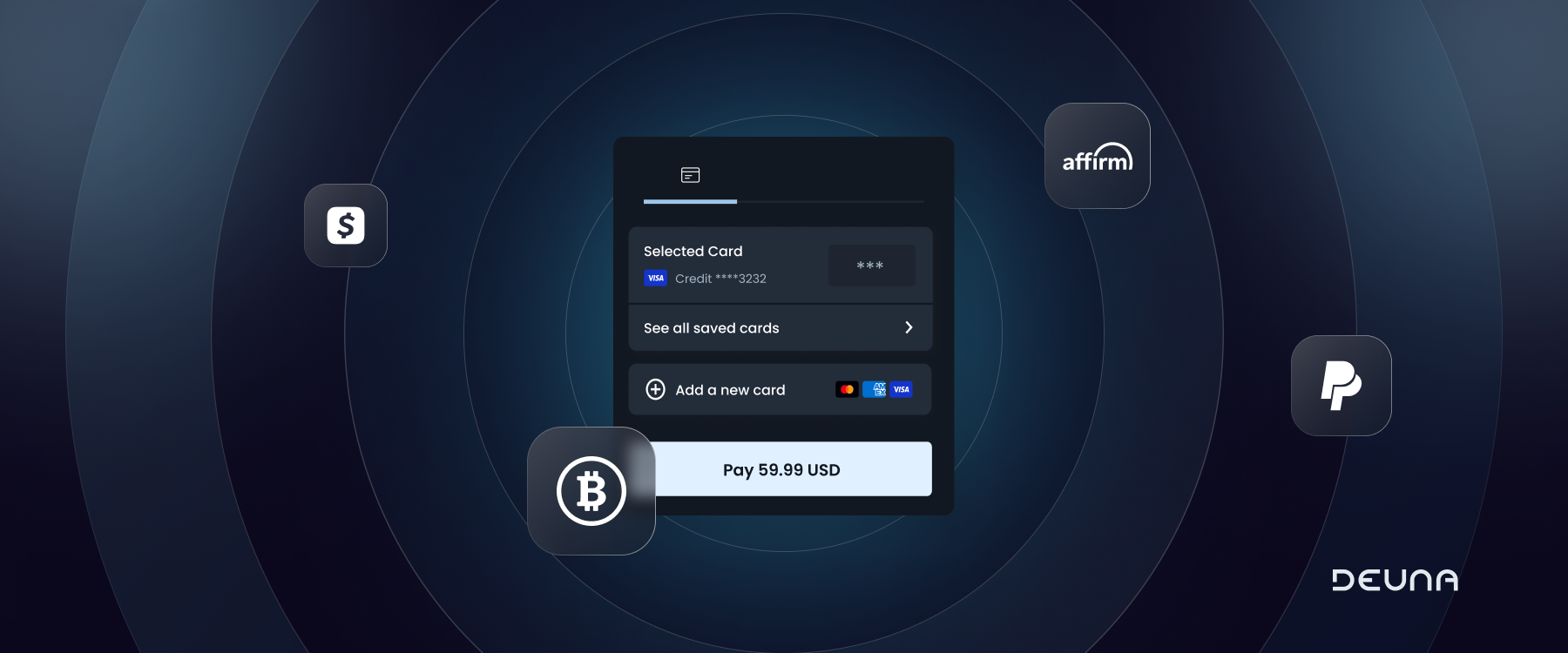
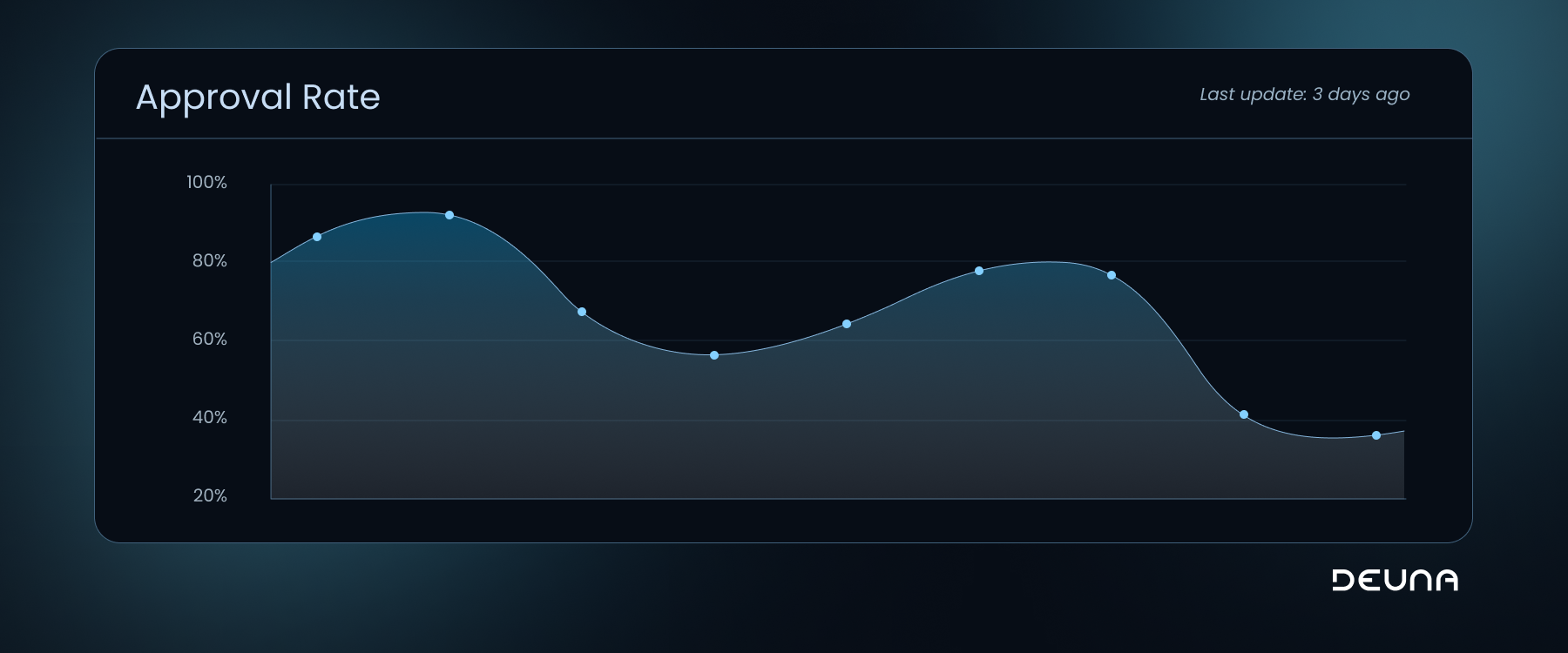
DEUNA provides both. A single integration connects merchants to 400+ payment and fraud providers, normalizing data across all of them into one consistent baseline. Athia, DEUNA's payments intelligence engine, works on top of that data continuously, identifying where approval rates are leaking, which processors are underperforming for specific transaction profiles, and where revenue is being left on the table.
Your business is already generating this data with every transaction. The only open question is whether it is working for you.