
Adding providers and markets is supposed to make a business faster. In practice it often does the opposite. Every new PSP brings its own reporting format, settlement cycle, and reconciliation logic, and the finance team ends up absorbing the difference manually.
The cost is measurable. PwC research widely cited across the finance function puts manual reconciliation at roughly 30% of a finance team's time, work that produces no insight and no revenue.
Payment orchestration platforms solve the operational problem, but the more valuable outcome is what they do with the data. Here are five ways advanced POPs convert payment data into growth.
Advanced POPs ingest data from every provider and normalize it into a single analysis-ready format. Schema mapping, validation, and transformation happen automatically rather than in spreadsheets.
This is the precondition for everything else. Payment data that arrives in six formats cannot be analyzed, only reconciled. Standardization at ingestion is what lets a business add providers without adding data debt.
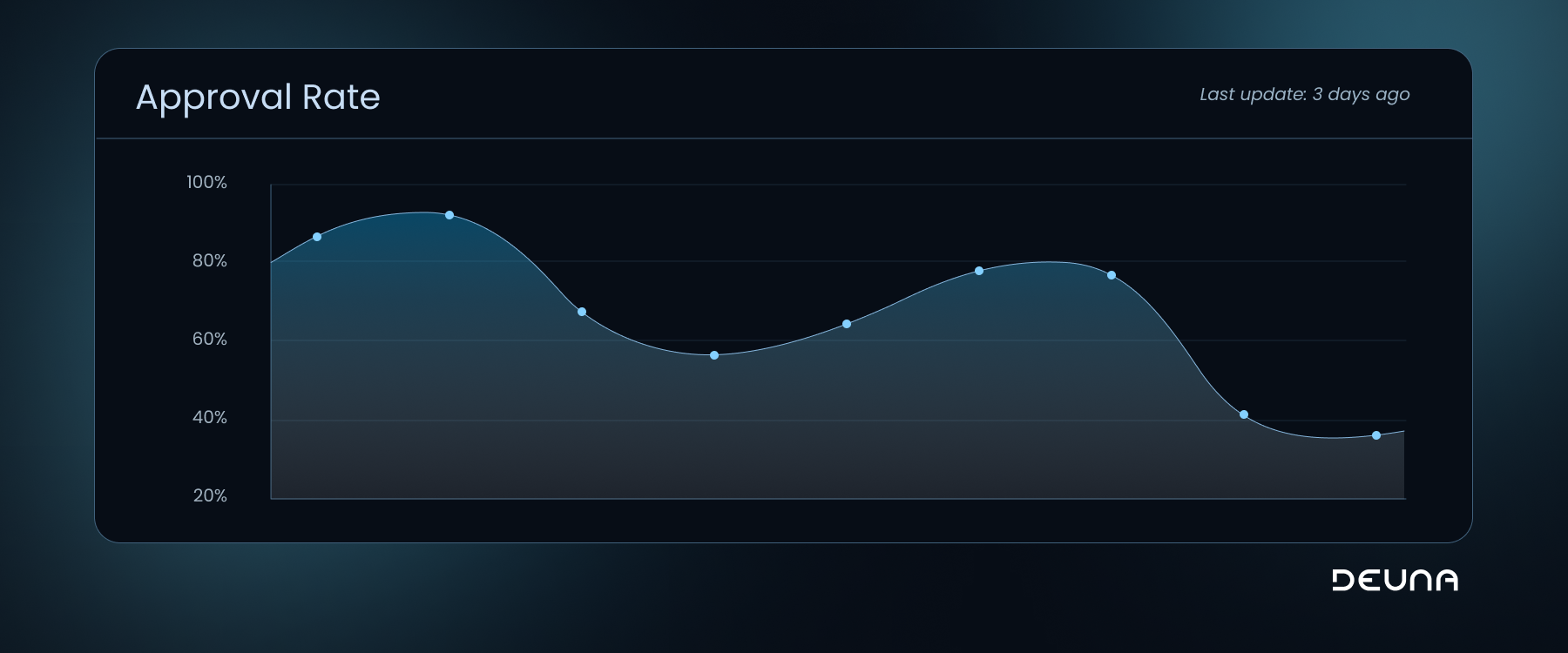
Once data is unified, acceptance rates, decline reasons, fraud signals, and provider latency become visible as they happen instead of at month end.
That visibility is only useful if it feeds decisions. In a modern orchestration layer, routing logic reads live provider performance and shifts traffic when a PSP degrades. The business stops discovering a bad acceptance week after it is over.
Payment data describes customers in ways marketing data often misses: which methods they prefer by market, how average order value shifts by method, when repeat purchases happen, and where installment options change conversion.
McKinsey found that payments providers applying advanced analytics to the customer journey improved retention and revenues by 10 percent or more. The mechanism is unglamorous. Knowing how customers actually pay produces better segmentation, better inventory timing, and fewer checkout experiences that quietly lose people.
Automating data handling across PSPs removes the manual matching step where most errors originate, and it compresses reporting cycles from days to hours.
The strategic value is that volume stops driving headcount. A finance team managing five providers and one managing twenty do roughly the same work when reconciliation is continuous and automated. For companies scaling across markets, that decoupling is the difference between growth and hiring to survive it.
Each new geography adds tax rules, audit requirements, and reporting obligations. Structured payment data makes those obligations reportable rather than reconstructable.
Regulatory pressure is not easing. In Thomson Reuters' 2025 Future of Professionals Report, 59% of professionals said the pace of regulatory change will have a high or transformational impact on their work over the next five years. Businesses with consistent, queryable payment data respond to that pressure. Businesses without it react to it.
The five capabilities above are usually presented as separate features. They are not. They are stages of the same process, and the order matters.
Standardized data makes real-time intelligence possible. Real-time intelligence makes routing decisions meaningful. Behavioral insight only emerges once payment data is clean enough to read as customer data. Operational efficiency is what happens when none of that requires manual work. Compliance becomes reportable rather than reconstructable because everything upstream was already structured.
Skip the first stage and the rest degrade. This is why merchants who add providers without unifying data often find that expansion made them slower, not faster.
The broader shift is in how payment data is classified internally. For years it belonged to finance, reviewed after the fact to confirm what already happened. Treated as an operating input instead, it informs which provider handles the next transaction, which methods surface at checkout in each market, and where margin is quietly leaking. That change compounds, because every transaction processed improves the quality of the next decision.
Payment data is not a byproduct of growth. In a properly orchestrated stack, it is one of its inputs.