
Payment declines are one of the most underestimated sources of revenue loss for enterprise merchants. Global ecommerce fraud losses reached $48 billion in 2025, according to Juniper Research. Yet while most organizations focus exclusively on stopping fraud, they are inadvertently slamming the door on legitimate customers. This "protection gap" is not just a technical glitch. It is a structural failure of legacy infrastructure to distinguish between risk and revenue.
According to the LexisNexis True Cost of Fraud Study 2025, every dollar of fraud now costs U.S. merchants $4.61 in total losses, up 32% since 2022. This multiplier includes the cost of lost merchandise, chargeback fees, and the expense of re-acquiring a customer who was wrongly rejected.
Defining what is a decline payment requires looking past the simple "Transaction Failed" notification.
A decline is a formal rejection of a payment request by the issuing bank or the payment processor. It serves as the final gate in the authorization loop.
However, a decline is rarely a binary event. We must view it as a data signal that falls into two primary categories: Hard and Soft.
A hard decline is a permanent rejection, such as a closed account or a stolen card report. A soft decline is a temporary "no" based on transient factors like a technical timeout, a regional connectivity flicker, or a temporary dip in the issuer’s risk appetite.
The root cause is typically a gap between what the merchant sends and what the issuer needs to approve the transaction. The issuer is making a decision in less than 200 milliseconds, running multiple simultaneous checks including fraud detection, spending limit validation, and transaction risk scoring. Many of the variables evaluated in that window are completely invisible to the merchant's stack.
The most common driver of false declines is a mismatch in data quality. If a merchant sends a transaction message that lacks specific fields prioritized in the authorization flow, such as device fingerprints or 3DS2 exemptions, the issuer's risk model may reject the transaction even when funds are available and the purchase is legitimate.
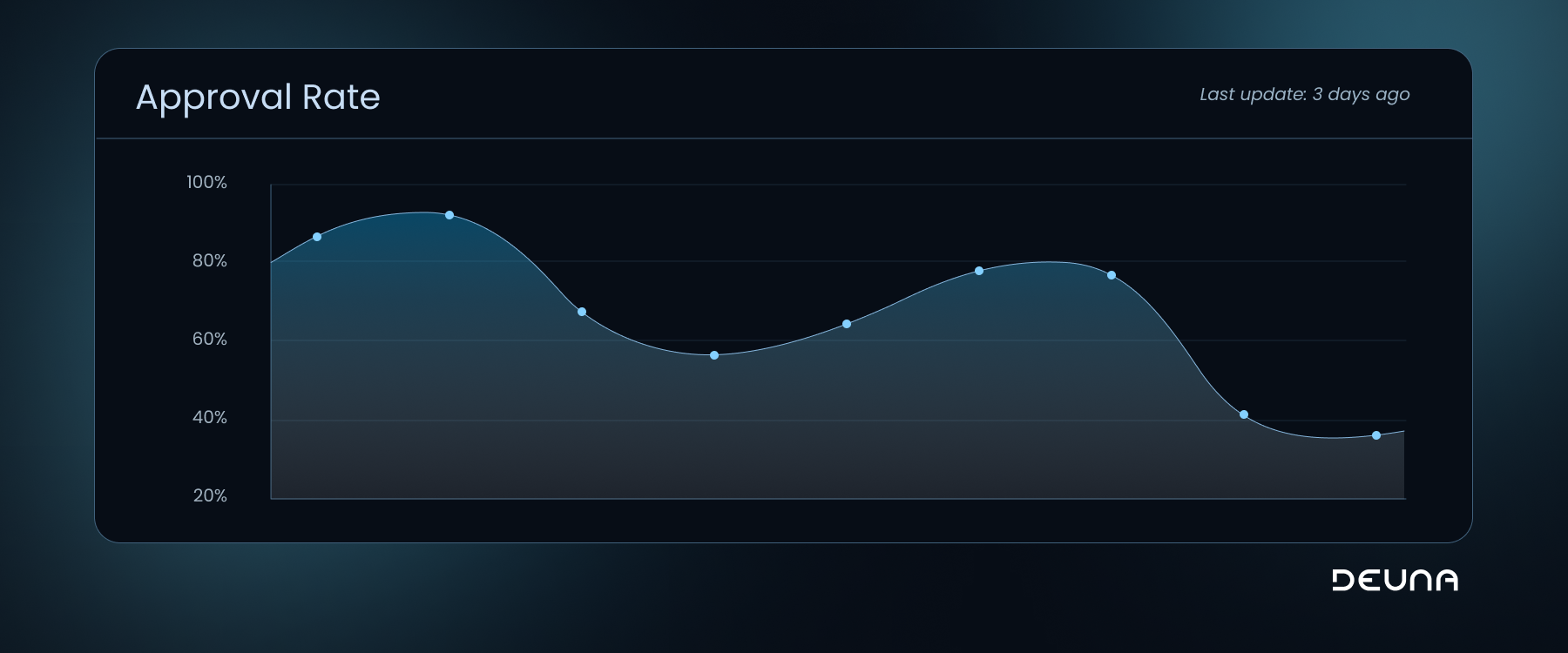
Issuer risk models are also volatile. A major US bank may tighten its fraud filters for a specific Merchant Category Code on a given morning due to a regional breach. A merchant using a static, rule-based orchestrator will continue to hit that wall until a human analyst spots the drop in a weekly report. This latency is the primary driver of revenue leakage.
A declined payment is not just a failed transaction. For the customer, it is a frustrating experience that happens at the worst possible moment: right when they are ready to buy. Research by Contentsquare shows that 40% of shoppers will switch to a competitor after a bad checkout experience, and a payment decline is one of the most jarring friction points in that journey.
According to Zendesk, over 50% of customers will switch to a competitor after just one unsatisfactory experience. That means a single false decline can permanently redirect a customer to a competitor, not just delay a sale.
On the operational side, the costs compound quickly. Visa and Mastercard have both introduced penalties for merchants who retry the same failed transaction more than ten times in a 24-hour period without updating the underlying data. Blindly retrying failed transactions does not recover revenue. It generates fees and signals poor payment hygiene to the networks.
The strategy must shift from reactive fixing to proactive infrastructure. For enterprise merchants, there are three practical levers that make the biggest difference.
1. Build redundancy into your payment stack
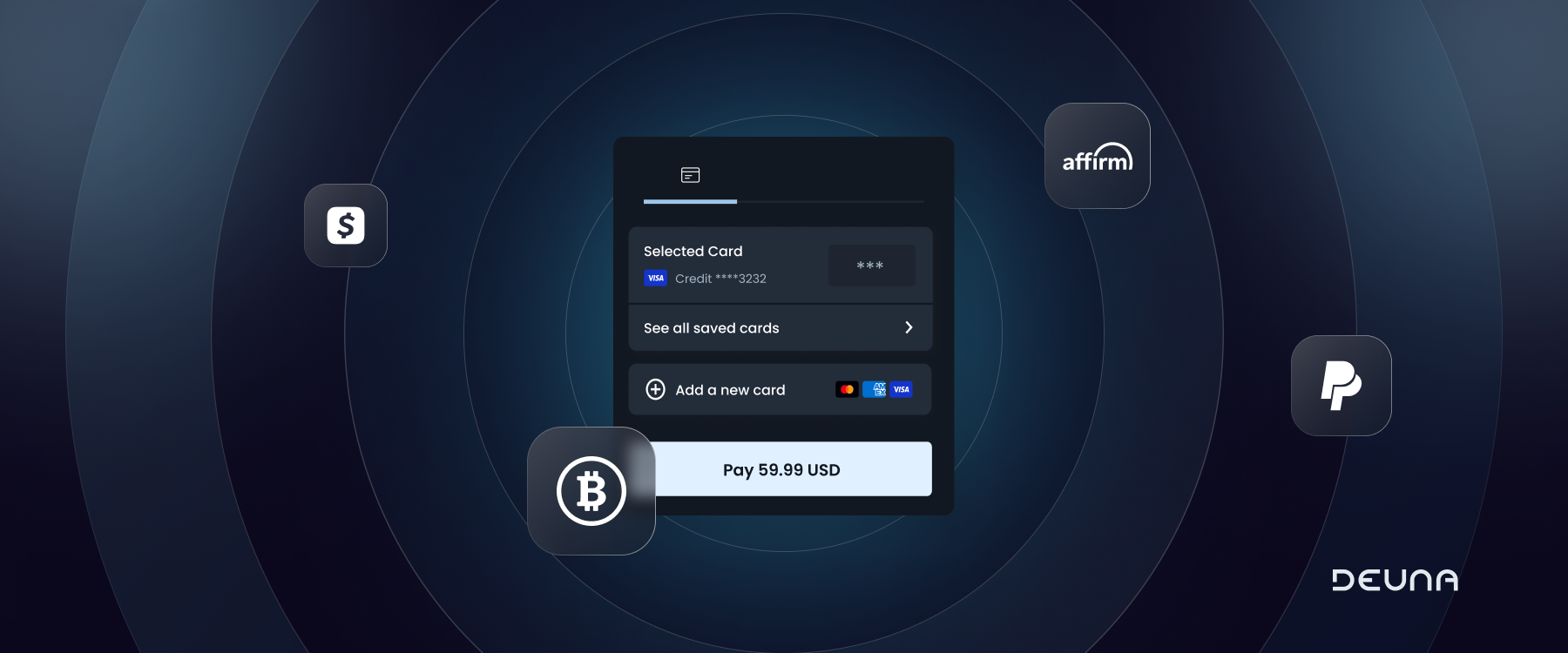
The most immediate way to recover a declined transaction is to have an alternative route ready. Routing to an alternate gateway in real time is the cleanest form of failed payment recovery available. If you are running a single gateway today, the immediate priority is standing up at least one alternative processor with failover routing, as that alone eliminates your single point of failure. When one provider declines a transaction or goes down, an orchestration layer automatically reroutes it to the next best option, without the customer ever noticing.
2. Unify your payment data
Multiple providers mean fragmented data. Without a common data layer, it is impossible to understand why transactions are failing or where the patterns are. A unified view across all PSPs allows merchants to identify which declines are recoverable, which processors perform better for specific card types or geographies, and where revenue is leaking silently.
3. Apply 3DS intelligently
Not every transaction needs the same level of authentication. Applying 3DS dynamically, only where it is genuinely needed based on the risk profile of each transaction, reduces unnecessary friction for legitimate customers while maintaining the security signals issuers need to approve payments with confidence. Triggering 3DS indiscriminately, or not at all, increases the likelihood of declines on both ends.
This is exactly what DEUNA's payment orchestration enables: a single integration that connects merchants to 400+ providers, a unified data layer across all PSPs, and Smart 3DS activation that dynamically triggers authentication only for high-risk transactions.
Most payment declines are not inevitable. They are the result of poor routing, fragmented data, and transaction messages that do not meet issuer expectations. For enterprise merchants, that gap translates directly into lost revenue and margin.
DEUNA addresses this at the infrastructure level, connecting merchants to 400+ providers through a single integration, unifying payment data across all PSPs, and enabling intelligent routing and 3DS activation on every transaction. Athia builds on top of this by turning that data into real-time intelligence, helping merchants identify which declines are recoverable and how to act on them faster.
The result is higher authorization rates, lower operational costs, and more revenue captured from every transaction.