
No company has a line item called "inflexible payment infrastructure." That is exactly why it survives every budget review.
The cost shows up scattered instead: a slightly worse approval rate in one market, a currency conversion nobody negotiated, a six-week engineering ticket to add one wallet, a checkout that loses buyers between cart and confirmation. Each is small enough to be somebody's minor problem. Added together, they stop behaving like a fee and start behaving like a margin.
Few sectors have bothered to total this up. Air travel is one that did, and the result is instructive for anyone selling across borders.
Edgar, Dunn & Company published a whitepaper in September 2025 putting payment costs at roughly 2.2% of airline revenues, around $22 billion globally, and calling payments one of the most underleveraged areas of airline operations. The firm estimates that carriers with the right payment strategy can unlock 10% to 20% in savings.
Two things travel beyond aviation. First, when a sector with thin margins finally measures its payment costs, the number lands in the same territory as its profit. Second, a meaningful share of that cost turns out to be architectural rather than fixed, which means it was always negotiable and nobody was negotiating.
Most enterprises have never run the equivalent exercise. They know their processing rate. They do not know what their infrastructure costs them.
A company selling in fifteen countries is not running one payment operation. It is running fifteen, each with its own currencies, exchange rate exposure, settlement timelines and local acquiring conditions.
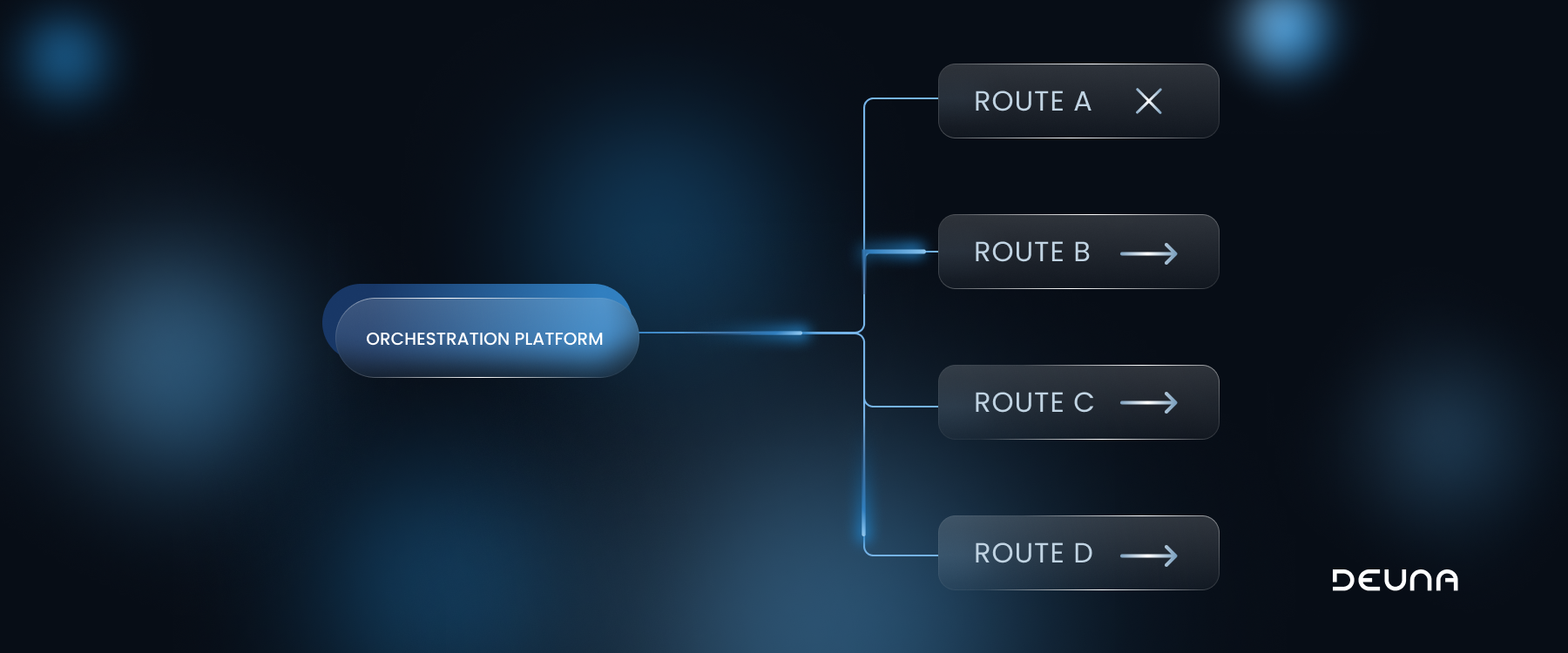
That would be manageable if the connections underneath were flexible. Usually they are not. When PSP integrations are hardcoded, routing stops being a decision and becomes an inheritance. Transactions flow where the original build sent them, regardless of which provider is approving best in that market this quarter, which setup is cheapest at current rates, or which acquirer is degrading during a peak sales window.
So the cost compounds quietly. Every market added multiplies the complexity, and every hardcoded connection removes a lever the commercial team needs to manage it. The business ends up with more exposure and fewer options at the same time.
The revenue side of the problem is easier to see once you look at how people actually pay.
Worldpay's 2026 Global Payments Report, based on more than 63,000 consumers across 42 markets, found that digital wallets accounted for 56% of global e-commerce transaction value in 2025. In the US, wallets reached 40% of online value, ahead of credit cards at 32%. Cards are far from finished, but in a growing number of markets they are no longer the default, and a checkout built exclusively around them is invisible to a real share of demand.
Buyers register that absence directly. In Baymard Institute's research on why shoppers abandon, 9% cited not having enough payment methods available and 10% cited a declined card. Neither is a design problem. Both are architecture showing through the interface.
Which reframes checkout friction. Too many steps, unclear options and slow response times get treated as UX debt. Often they are the surface of a system that cannot add a method, cannot personalize the flow by market, and cannot retry a failed transaction through another provider, because it was never built to change.
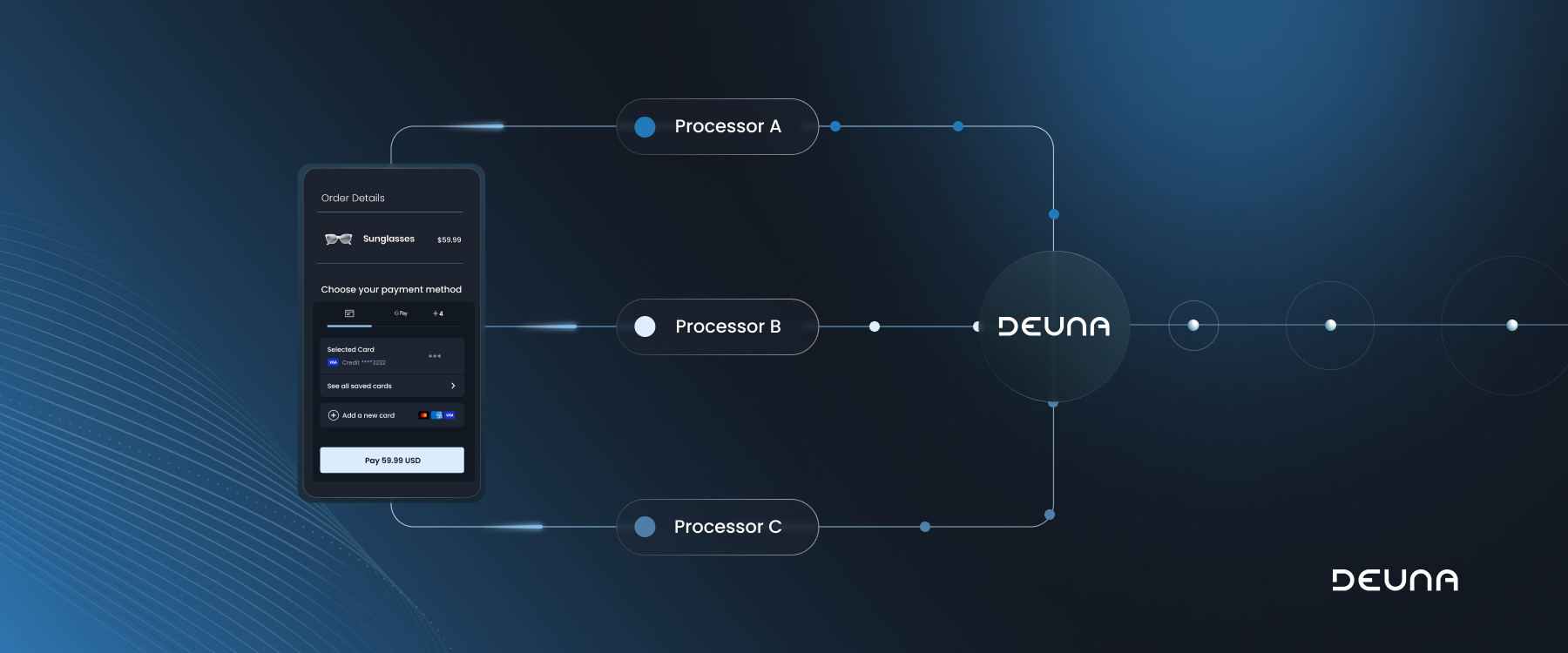
DEUNA works alongside the PSPs, acquirers and fraud engines a company already trusts, connecting them through a single integration to more than 400 payment providers, antifraud tools and local payment methods. Adding a wallet or a local method in a new market becomes a configuration change rather than a release cycle, and routing adapts by market, currency and card type without rebuilding checkout.
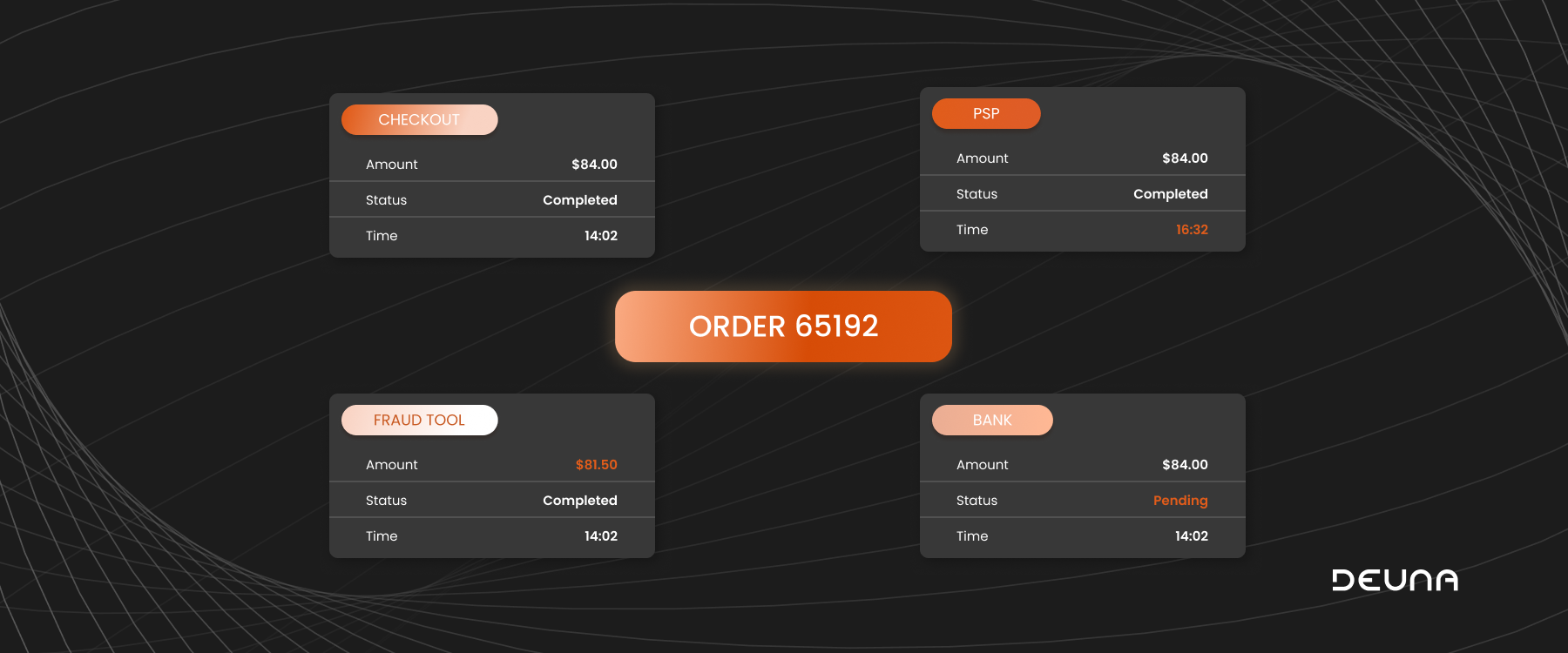
Athia gives that flexibility direction. She reads payment performance continuously across providers and markets, shows where acceptance and cost are drifting and why, and points to the adjustment that recovers the most, while it is still recoverable rather than after the quarter closes.
Payment infrastructure is chosen once, usually by engineering, usually under launch pressure. Then it silently sets the ceiling on everything the commercial team tries to do for years afterward. Which markets are viable. How fast a new one opens. What approval rate is achievable. What a customer is allowed to pay with.
None of that appears in a payments budget. All of it appears in the margin.
The question worth asking is not whether your payment infrastructure is expensive. It is whether it is still a decision you get to make. Talk to DEUNA about what your current architecture is costing, and what becomes possible when it can move.