
Payment routing and payment orchestration get used as if they mean the same thing. They do not. Payment routing is one function that lives inside payment orchestration, and treating the two as equals is one of the most expensive misunderstandings an enterprise merchant can carry into a payments decision.
The confusion is easy to see. Routing is the visible part of the payments stack. It rescues declined transactions, improves approval rates, and reroutes payments in real time. So when a team sets out to fix a leaky payments stack, payment routing is often the first and only thing they buy.
The problem is that routing solves one third of the picture. The other two thirds, the parts that quietly drain time and revenue, get left on the table.
Payment routing is the practice of directing each transaction to the most suitable provider inside a network of processors and acquirers, then retrying declined payments through alternate paths. That is genuinely valuable work. According to LexisNexis, declined payments could cost businesses worldwide around 118 billion dollars in lost revenue every year.
That value is exactly why routing gets mistaken for the whole solution. It is the most visible lever in the stack, and it produces results you can watch on a dashboard. But recovering a declined transaction is not the same as running a healthy payments operation.
Payment Orchestration vs Payment Routing: The Real Difference
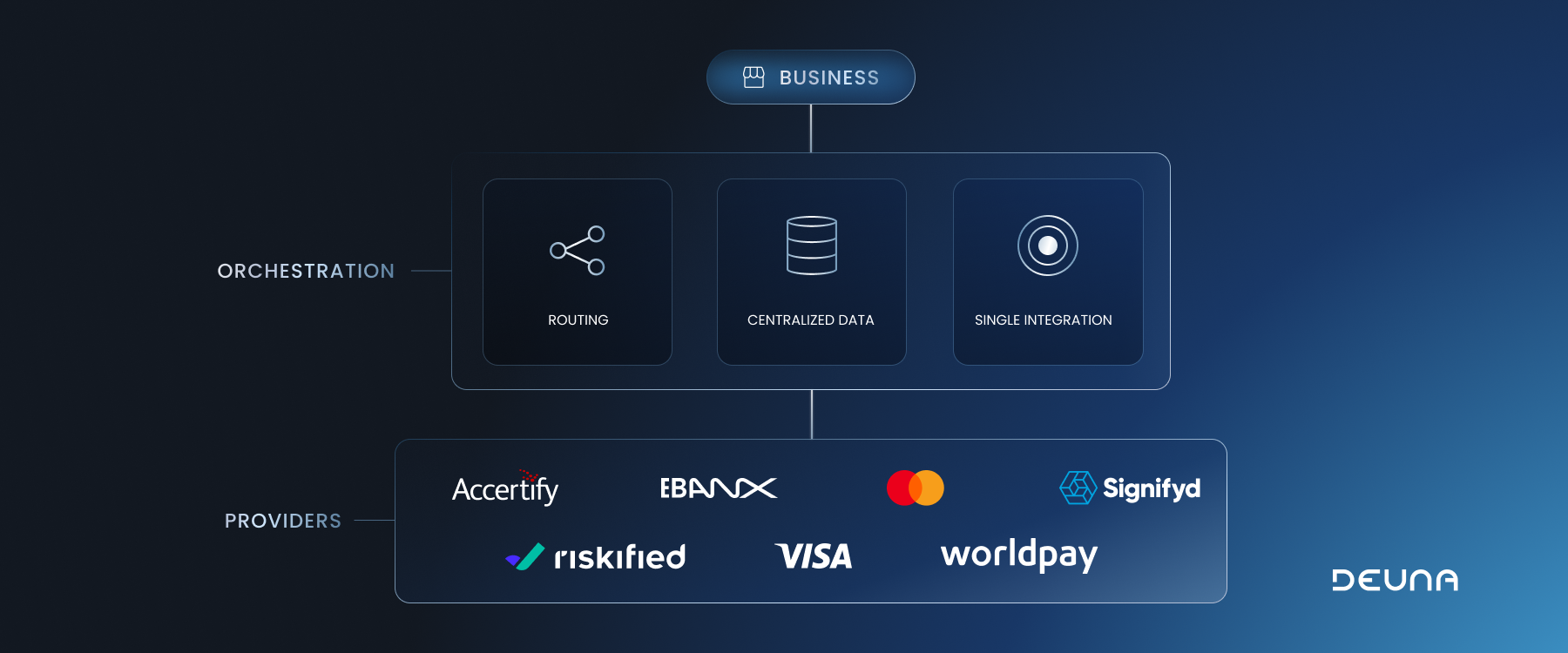
Payment orchestration is the layer that manages the entire payment flow across every provider in your stack. Payment routing is one capability within it. A payment orchestration platform routes transactions intelligently, but it also centralizes your transaction data and connects every payment method and provider through a single integration. Routing is one of those three jobs, not all of them.
That distinction matters because the two capabilities you cannot see are the ones that keep costing you. A payments stack built on routing alone directs and retries transactions well, while the operation around those transactions stays fragmented. The data sits in separate systems and the provider network stays capped at whatever you have already connected. Payment orchestration is what closes both of those gaps.
The first thing payment routing leaves behind is your data. Every provider you add returns its transaction records in its own format, inside its own system. Routing moves the payment, but it does not pull those records together.
That fragmentation carries a measurable cost. According to PwC, companies can spend up to 30% of their time on manual data reconciliation. That is time your finance team loses stitching together reports from separate providers instead of acting on what the numbers say.
A payment orchestration platform closes that gap. It centralizes and standardizes transaction data across every connected provider, so reconciliation runs automatically instead of by hand. It also delivers end to end traceability, which means you can follow any single transaction and every event attached to it using filters and search.
The result is not just cleaner books. It is faster, better informed decisions, because the full picture of your payments lives in one place.
The lesson is simple. Payment routing is one of three things payment orchestration does, alongside unified transaction data and single point integration. Buy routing on its own and you get one third of the value, while reconciliation hours and missed markets keep costing you. The three work as a system: more approved transactions, less fraud, and lower processing cost reinforce each other only when they sit on the same layer.
None of this replaces the providers you already work with. Payment orchestration sits above your processors, acquirers, and fraud engines and routes to them intelligently, making the specialists you rely on work better together.