
When enterprise merchants plan their expansion into Latin America, they tend to obsess over the right things: pricing strategy, local logistics, regulatory compliance. Then they go live, and quietly lose a significant portion of potential sales at the payment screen. Not to fraud. Not to cart abandonment. To something far more preventable: the wrong payment methods.
Alternative payment methods like Pix, digital wallets, bank transfers, and cash vouchers already represent 46% of eCommerce volume across LATAM as of 2024, according to PCMI data. In practical terms, it means that roughly half of all online transactions in the region are being completed without a credit or debit card. Merchants who haven't built their checkout around this reality are losing sales they never see, from customers who simply found another option.
Brazil is the clearest case study, and it sets the tone for the region.
When Brazil's Central Bank launched Pix in November 2020, the banking establishment had four years of data showing that cards would remain dominant. They were wrong. By 2024, Pix processed 63.4 billion transactions totalling $4.6 trillion USD. It is now used by 172.6 million Brazilians and accounts for roughly 40% of eCommerce share, surpassing credit cards in Brazil's digital commerce mix. Pix Automático, a recurring payments extension, launched in mid-2025 and is already accelerating adoption in subscriptions and utilities.
Here's the number that should concern any merchant not yet offering Pix: Brazil is LATAM's largest eCommerce market at $346 billion in 2024. Pix alone accounts for approximately 22% of all eCommerce payments across the entire region. Not supporting it doesn't just limit conversion in Brazil, it limits access to the single largest payment rail in Latin America.
Mexico, Colombia, Peru, Chile, Argentina: each market has at least one dominant local payment method that isn't a card, and that customers expect to see at checkout.
In Mexico ($97B market), SPEI, CoDi, and OXXO's cash network are how tens of millions of consumers transact online. In Colombia, PSE handled 370 million bank transfer transactions in 2024, 34% of all eCommerce. Nequi, the leading wallet, is the preferred method for 66% of its 18 million users. In Peru, Yape has 14 million users and growing.
Miss these methods, and you're not competing. You're invisible to a massive slice of each market.
The problem with missing payment methods is that the damage is invisible. When a Brazilian customer doesn't see Pix, they don't send a complaint. When a Colombian buyer can't find PSE, they don't fill out a feedback form. They just leave, and that lost transaction gets absorbed into your general abandonment rate, making the root cause nearly impossible to trace without the right data.
This is why merchants consistently underestimate the impact. The revenue loss from unsupported APMs never shows up as a line item. It hides in conversion gaps that look like audience problems, pricing problems, or UX problems, when the real issue is simpler: you're asking customers to pay in a way they don't use.
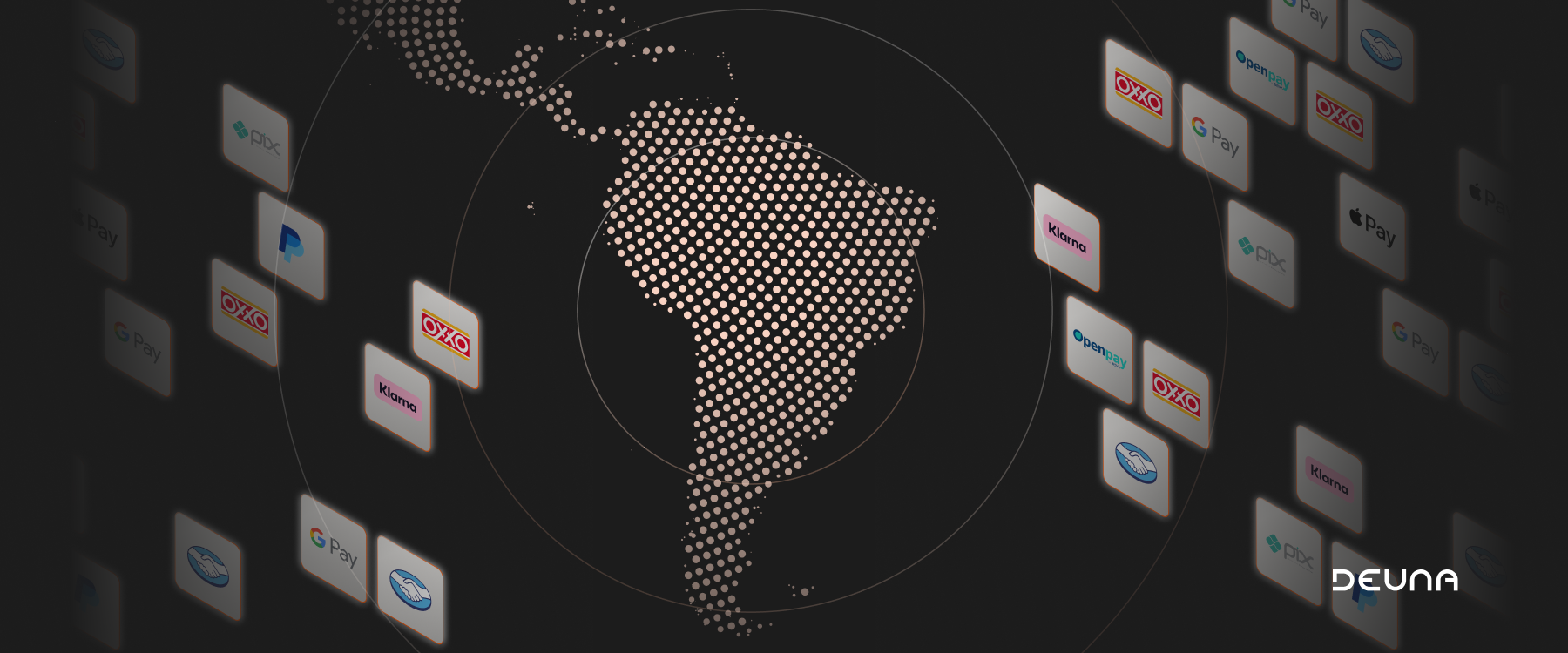
The good news is that expanding the APM coverage across LATAM no longer means building and maintaining dozens of separate integrations. With DEUNA, merchants access 200+ payment providers, including all major LATAM APMs, through a single, unified platform.
Whether it's Pix in Brazil, PSE in Colombia, SPEI in Mexico, or Mercado Pago in Argentina, DEUNA connects your checkout to the payment rails your customers already trust. No market-by-market build cycles. Just higher conversion, from day one.
The question for enterprise merchants is no longer whether to support APMs in Latin America. It's how quickly they can close the gap before the conversion cost becomes a growth ceiling.