
The monthly report lands, authorization rate is down a point in one market, and nobody in the room can say why. An issuer that tightened its filters? A fraud rule someone adjusted weeks ago? By the time anyone traces it, those customers have already bought somewhere else.
The money is rarely small. Worldpay estimates that for a business processing $1 billion a year, one percentage point of authorization improvement is worth $10 million in recovered revenue, with no new customers and no change in pricing.
A transaction success rate is the share of attempted payments that get approved. That single number, though, is the compressed output of several decisions your infrastructure made before the issuer ever weighed in: which method the checkout displayed, which provider carried the payment, what data the message contained, and whether fraud logic intervened first.
The issuer then decides in under 200 milliseconds, running fraud detection, limit validation, and risk scoring at once. Most of what it evaluates is invisible to your stack.
Three reasons account for most avoidable declines.
The first is data quality. When a transaction message lacks the fields the authorization flow prioritizes, such as device fingerprints or 3DS2 exemptions, an issuer can reject a legitimate purchase even with funds available.
The second is static routing. Issuer risk models shift constantly, and a bank might tighten filters for a specific Merchant Category Code overnight. With fixed rules, you keep hitting that wall until an analyst spots the drop in a weekly report.
The third is overcorrection. The LexisNexis True Cost of Fraud Study 2025 found every dollar of fraud now costs US merchants $4.61 once chargebacks and re-acquisition are counted, up 32% since 2022. That pressure pushes thresholds tighter, and tighter thresholds catch good customers. Research from Contentsquare shows 40% of shoppers switch to a competitor after a bad checkout experience.
Payment orchestration improves transaction success rates by giving every payment more than one possible path, then choosing between them in real time. It works on three levers.
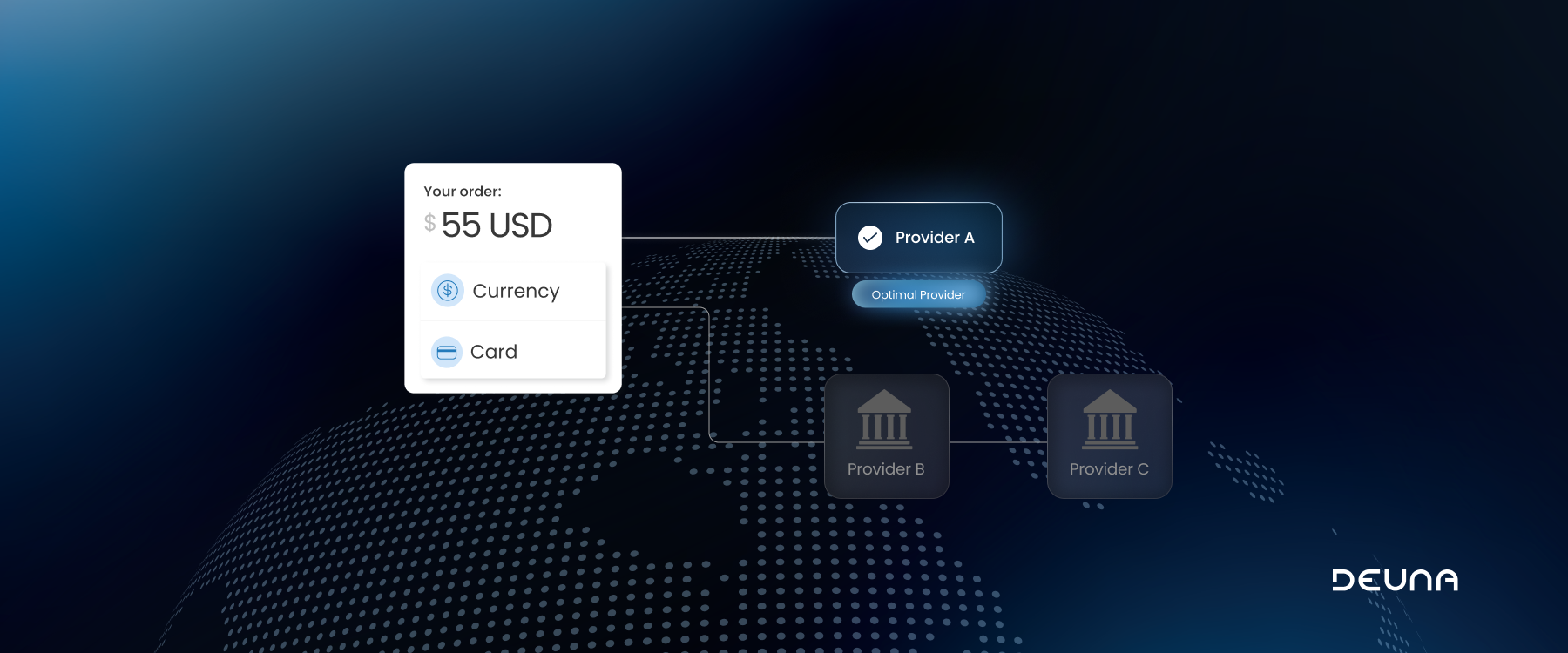
Smart routing. Each acquirer carries its own issuer relationships and performance profile, so the same payment can clear with one provider and fail with another. Orchestration evaluates the issuing bank, method, value, and location per transaction and sends it where approval is most likely. DEUNA connects merchants to 400+ providers, acquirers, alternative payment methods, and fraud engines through a single integration, which is what makes that comparison possible.
Disciplined retries. Rerouting a soft decline to an alternate provider in the same session recovers revenue the customer never knows was at risk. Volume is the trap: Visa and Mastercard penalize merchants who retry the same transaction more than ten times in 24 hours without updating the underlying data. What works is classifying the decline correctly, enriching the message, and retrying once through a better route.
Unified payment data. Multiple providers create fragmented reporting, which makes it impossible to tell which declines were recoverable. A single data layer across every PSP is what turns that into an answer, and it's what Athia works on. She monitors payments, fraud, and provider performance continuously, surfaces a market-level drop while it's happening, explains her reasoning, and pushes the correction through workflows connected to your systems.
None of this replaces your existing PSPs or fraud engines. It puts each one where it already performs best.
Your approval rate says more about your architecture than about your providers. Same PSPs, same customers, same fraud tools: change how transactions are matched, retried, and measured, and the number moves.
Merchants who treat transaction success as a reported metric keep explaining last month's variance. The ones who treat it as something they operate keep recovering revenue they'd already earned.
If your approval rate is a number you receive rather than one you steer, it's worth finding out what that gap is costing you. Our team can show you where your transactions are actually failing and what recovering them would be worth.