
Your approval rate went up half a point last quarter. The dashboard is green. And you still have no idea why.
That is the honest state of payment performance in most enterprise stacks. Not because anything is broken, but because payments is not one system. It is a sequence of decisions spread across merchant, gateway, processor, network, issuer, fraud tools, and authentication layers like 3DS. Each layer does its job but none of them sees the whole flow.
Three structural gaps explain most of it. Structural, because no amount of tuning at the individual layer resolves them.
A single transaction may pass through multiple PSPs, acquirers, fraud tools, and regional configurations. Each introduces its own data formats, decision logic, performance behavior, and failure patterns.
The problem is normalization. A decline reason coded one way by one provider means something different coded by another. Performance in one region is measured against a baseline that does not translate to the next. Without a common structure, that data supports after-the-fact reporting and nothing more.
So merchants optimize surface-level metrics. Approval rate moves half a point and the quarter looks fine, while the real drivers of performance stay hidden underneath.
A unified view is not a unified decision layer. A view tells you what happened across providers. A decision layer lets that comparison change what the next transaction does.
That is the difference between knowing your stack is underperforming and being able to fix it in the moment.
Issuer behavior changes. Regional performance shifts. Fraud patterns evolve continuously and by design, because the people generating them adapt.
Routing logic, in most stacks, does not.
Rules get written when they reflect reality. A PSP performs well for a BIN range, so traffic goes there. An issuer responds better to a certain configuration, so it gets locked in. Every one of those decisions was correct when it was made.
Then the ecosystem moves and the rule stays put. It does not fail loudly. It becomes progressively less right, and the gap widens quietly over months.
This is structural, not a maintenance issue. The mismatch is between a fixed system and a moving one. Reviewing quarterly means being wrong for up to a quarter.
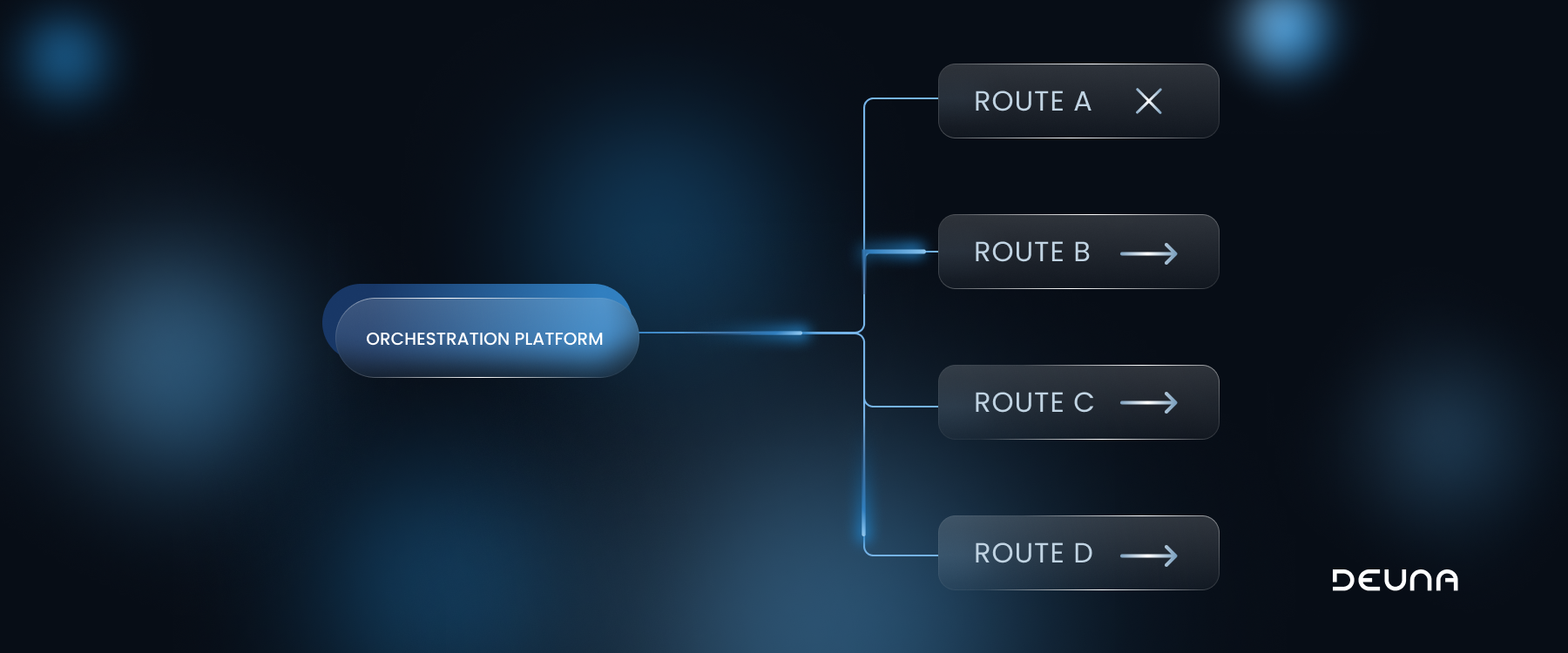
The only real fix is evaluation that moves at the same speed as what it evaluates: each transaction assessed in real time against issuer behavior, BIN-level performance, cost, and risk as they are right now.
Authorization decisions happen in milliseconds. Pattern identification happens in weeks. Someone notices a dip, pulls the data, builds the case, proposes the change, gets it approved, ships it.
By then the financial impact has materialized. The analysis was correct. It was just correct about a period that is over.
This is why payment optimization so often feels like chasing rather than steering. The work is good. It arrives after the decisions it was meant to inform have already been made, thousands of times, in a direction nobody chose.
Closing this gap means execution embedded directly into the flow instead of sitting downstream of it.
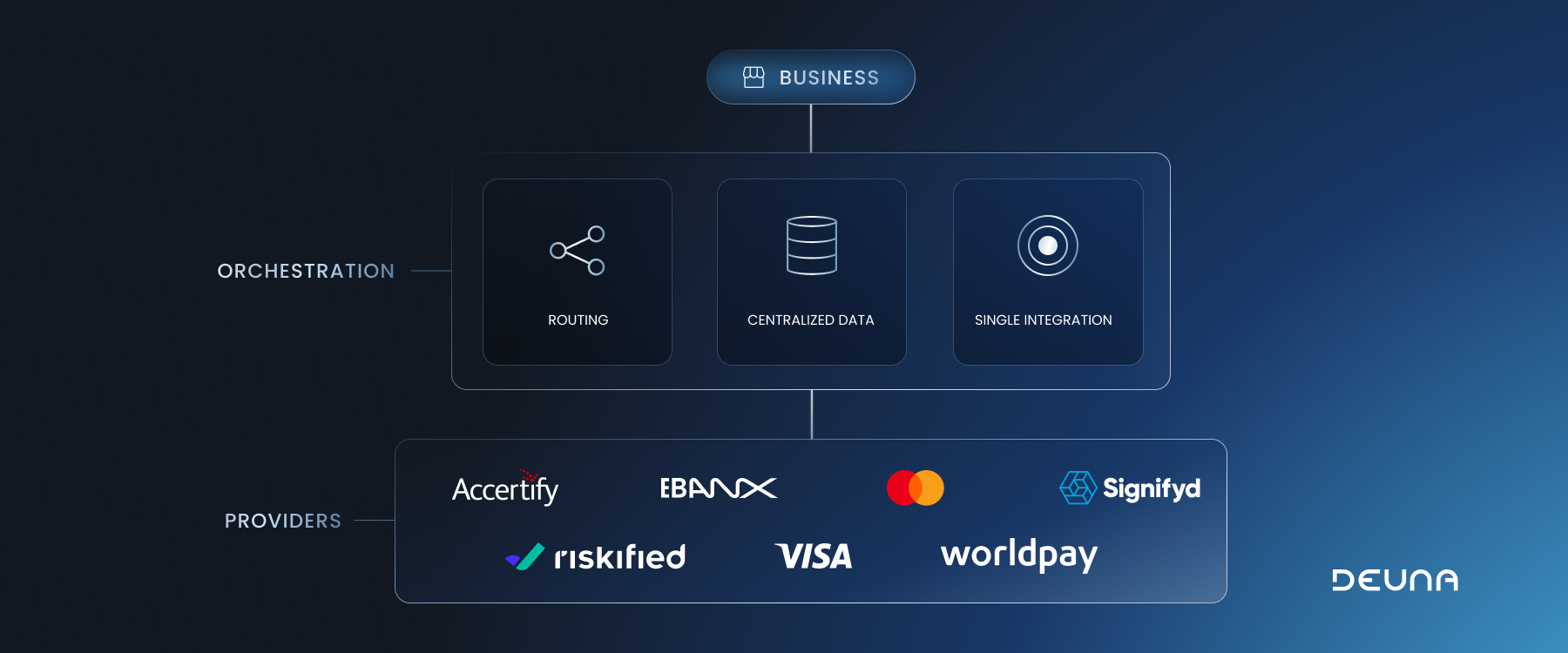
DEUNA was built to solve this gaps. A unified data layer across providers so comparison means something. Real-time evaluation so decisions reflect the ecosystem as it is, not as it was. Execution embedded in the flow so insight and action stop being separated by weeks.
Athia extends that foundation. She works across the stack alongside the PSPs and fraud tools already in place, closing the distance between what the data shows and what the next transaction does.
The gaps are structural, which sounds like bad news and is the opposite. Structural problems have addresses. The merchants that treat payment performance as something they design, rather than something they inherit, are the ones who stop leaving revenue on the table.