
At the end of every month, somewhere inside your finance team, someone opens a spreadsheet. They export a settlement report from one PSP, download a CSV from another, pull a third file from a regional acquirer, and spend the next several hours trying to make them all agree. Transaction IDs do not match. Fee labels are different. Timestamps are in different time zones. The number that finally lands in the general ledger is, at best, an approximation of what actually happened.
This is reconciliation. Most enterprise merchants treat it as an operational task to be automated. But the real question is not how to make it faster. It is how much money is quietly leaking through it, and where.
Ask a CFO about their biggest costs and you will hear about technology, and customer acquisition. Reconciliation rarely makes the list, because its cost is almost never captured as a line item.
But the numbers tell a different story. Modern Treasury's 2025 State of Payment Operations report found that 98% of companies still perform some payment operations manually, and 51% perform up to half manually. 49% use five or more systems to manage payments, and 68% of finance teams say they waste significant time on payment operations.
The 2025 AFP Treasury Benchmarking Survey, underwritten by Wells Fargo, reports that nearly three-quarters of treasury practitioners cite cash management and forecasting as their top priorities. For many of them, reconciliation is exactly what prevents them from doing it. Every hour spent normalizing data from five PSP formats is an hour not spent on cash flow analysis, cost optimization, or forward-looking work that actually changes outcomes.
A single PSP is manageable. However, the moment a merchant adds a second provider, complexity multiplies.
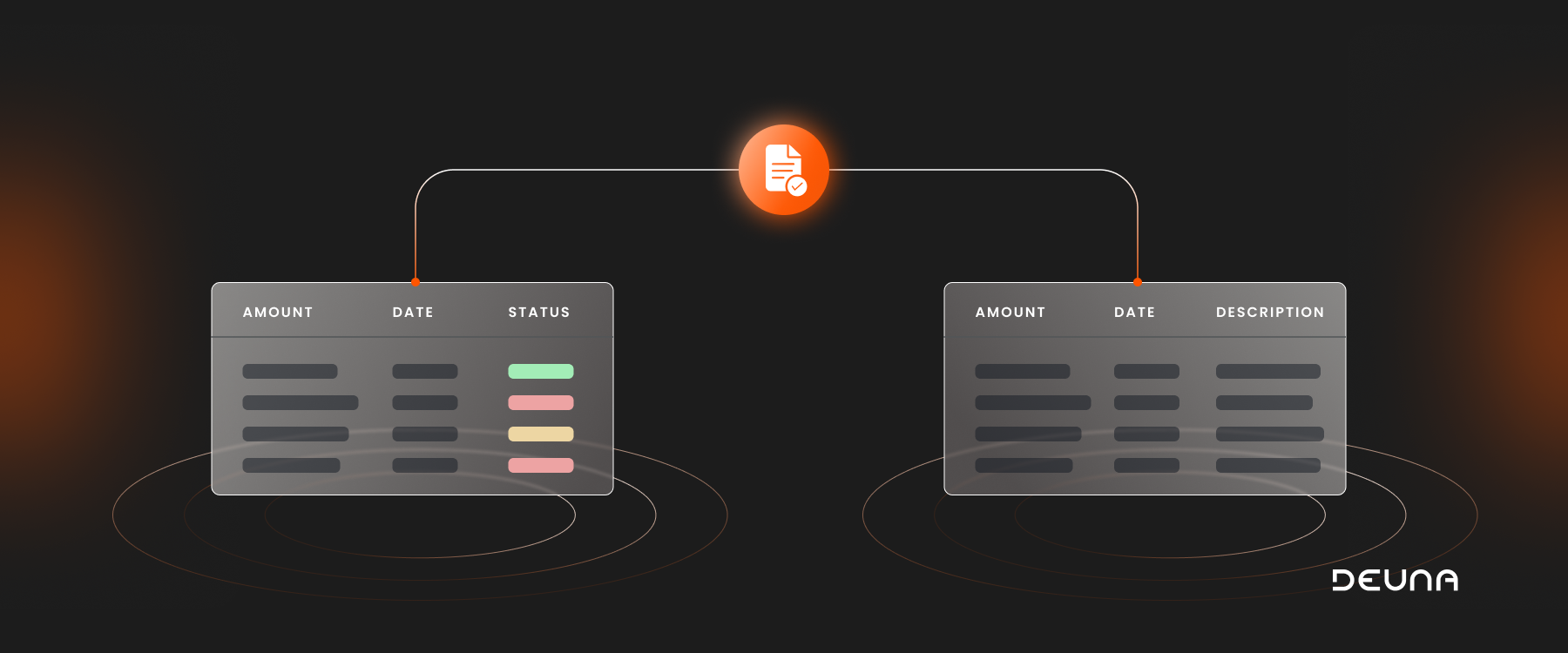
Each PSP exposes payment events through its own schema. A single transaction can generate three or four distinct records: one when the payment intent is created, another when it is captured, another when the fee is calculated, and another when the payout settles. Each record carries a different identifier, and the relationships between them are not one to one. A capture can split across multiple settlements.Before any matching can happen, all of these events have to be mapped to a single internal model of what one payment actually is.
According to Kani Payments' 2025 Reconciliation and Reporting Survey, the average firm spends three hours just preparing data before reconciliation begins. Cross-currency matching was cited by 23% of respondents as their top challenge, and 82% struggle to meet reporting timelines. As more providers are added, the reconciliation burden grows while the team handling it stays the same size.
The most expensive reconciliation problems are not the ones that get caught. They are the ones that do not:
Transaction records, settlement reports, fee breakdowns, refund histories, and chargeback statuses live in different systems, in different formats, on different timelines. Connecting them after the fact is what creates the monthly reconciliation burden. Connecting them at the source is what eliminates it.
An orchestration layer that sits above multiple payment providers and normalizes transaction data as it flows through is the infrastructure that makes real-time reconciliation structurally possible. Matching happens as transactions move, which means discrepancies surface while dispute windows are still open and the cost of resolution is measured in minutes rather than days.
When reconciliation runs continuously rather than periodically, the shift is not just operational. It changes what the finance function can do:
This is what DEUNA's reconciliation capability is designed to enable. It sits inside the same orchestration layer that handles routing, so the data driving payment decisions is the same data reconciliation runs on. On top of that foundation, Athia, DEUNA's agentic payments intelligence layer, turns that data into action: spotting opportunities as they happen and showing where providers are quietly costing you money.
The question is not whether reconciliation is broken. It is whether the architecture underneath it was designed for a single-provider world that no longer exists. Fixing reconciliation as a process buys you a few hours back per month. Fixing it as an architecture buys you payment data your finance team can actually act on, while the dispute windows are still open and the money is still recoverable.