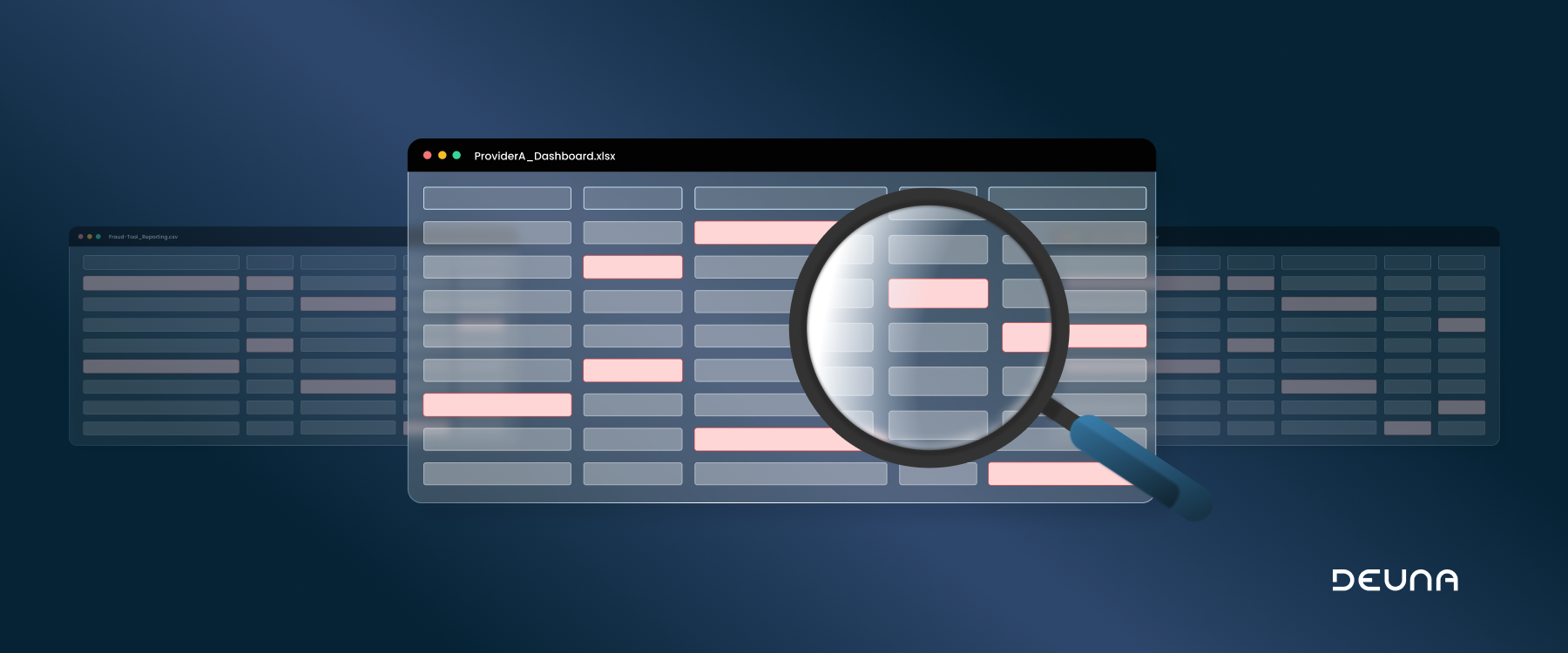

Most enterprise finance teams live in a state of "perpetual catch-up." Every month, the cycle repeats: pulling settlement reports from five different PSPs, downloading bank statements, exporting internal ERP data, and spending hundreds of hours in massive spreadsheets trying to figure out why the numbers don't match.
In the industry, we call this reconciliation. In practice, for many merchants, it's manual forensic accounting.
The problem isn't that finance teams lack the skill; it's that the payment ecosystem has outpaced the tools used to track it. As merchants scale across providers, geographies, and payment methods, the volume of data points, and the potential for "leakage", explodes.
This is where Agentic AI is moving reconciliation from a backward-looking administrative burden to a real-time strategic asset.
The typical enterprise merchant uses multiple processors to ensure redundancy and high approval rates. However, this creates a data fragmentation problem. Each provider has its own reporting cadence, time zones, fee structures, and decline codes.
When a transaction occurs, the data is trapped in silos. The merchant's internal order system says $100 was sold. The PSP says $100 was authorized. But the bank settlement shows $97.40. Was the difference a standard interchange fee? An unexpected cross-border surcharge? Or a silent technical error that has been draining margin for months?
Identifying the "why" behind those discrepancies currently takes days or weeks. By the time the finance team spots a recurring fee error or a missing settlement, the revenue is long gone, and the opportunity to fix the root cause has passed.
Standard reconciliation software focuses on deterministic matching, simply checking if "Column A" equals "Column B." If they don't match, the system flags it for a human to investigate.
Agentic AI flips this model. Instead of just flagging a discrepancy, AI agents perform contextual reasoning.
An AI-driven reconciliation engine doesn't just see a $2.60 difference; it analyzes the transaction metadata. It identifies that the transaction was a corporate card processed through a specific European gateway on a holiday. It reasons that the fee aligns with a recent interchange update from the card network and automatically categorizes it.
More importantly, if it detects a pattern, say, a 15-basis-point discrepancy across all transactions from a specific acquirer, it doesn't wait for the month-end close. It flags the anomaly in real-time, allowing payment ops to challenge the provider or adjust routing logic immediately.
To transform reconciliation from a cost center into a growth engine, enterprise merchants are focusing on three architectural shifts:
1. Standardized Data Architecture. AI cannot reason across fragmented data. The first step is creating a standardized data architecture, standardizing every settlement signal, fee type, and currency fluctuation into a single high-fidelity dataset. This allows the AI to "see" across the entire payment lifecycle in one language.
2. Autonomous Exception Handling. In a manual world, 80% of a finance team's time is spent on the 5% of transactions that don't match. AI agents automate the "low-level forensic" work, resolving simple discrepancies (like timing differences or known fee structures) without human intervention. This allows the team to focus only on high-value strategic anomalies.
3. Real-Time Margin Monitoring. Traditional reconciliation is a post-mortem. AI-driven reconciliation is a live diagnostic. By reconciling transactions as they settle (often within hours), merchants can monitor their "Net Revenue" in real-time. If a routing change increases approval rates but destroys margin through hidden fees, the AI detects the trade-off instantly.
At DEUNA, we believe reconciliation shouldn't be the final step in a transaction; it should be the first step in the next optimization.
Through Athia, our payment intelligence engine, reconciliation data is no longer buried in a PDF report. It is fed back into the orchestration layer. If Athia identifies that a certain processor is consistently miscalculating fees or delaying settlements, that data informs our smart routing logic.
The result is a self-healing payment stack. You aren't just checking that you got paid; you are using that data to ensure every future transaction is more profitable than the last.
The era of the "monthly reconciliation scramble" is ending. The era of autonomous, real-time financial intelligence has begun.